Choosing Composite Decking for Texas Heat: Color, Shade and Comfort
· By Kirill Ostrovskii · Updated October 23, 2026
A beautiful sample in an air-conditioned showroom does not tell you how a deck will feel in an Austin backyard. Sun exposure, board color and shade deserve attention before you choose the finish.
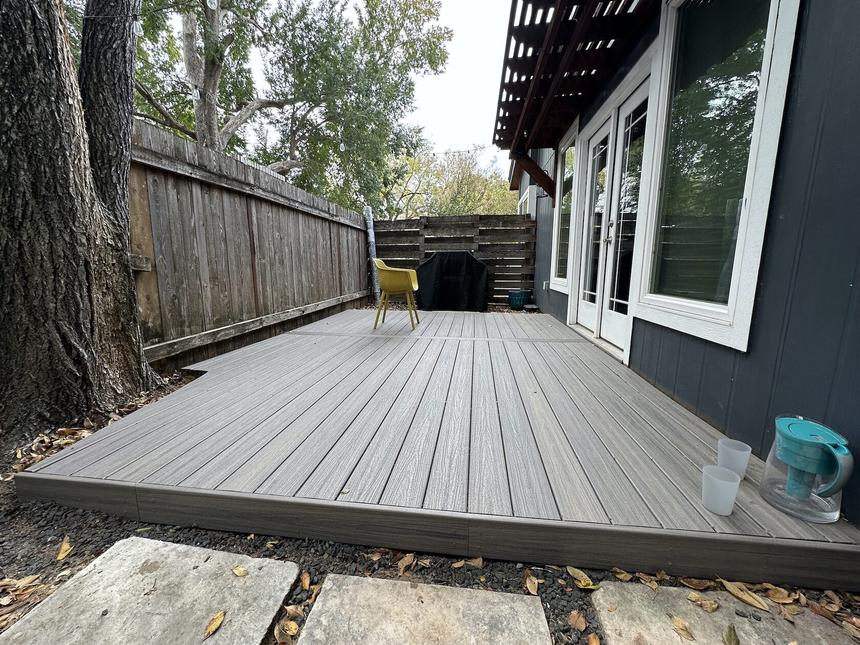
All deck surfaces can become hot
Composite, PVC and wood decking can all warm significantly in direct sun. A product described as cooler is being compared with another surface under particular test conditions. It is not a guarantee that the deck will stay comfortable for bare feet on a hot afternoon.
For a sunny site, compare the exact collection and color rather than relying on a brand-wide claim. Consider the times of day when your family uses the deck and whether children or pets will be on the surface.
Compare light and dark samples outdoors
Darker colors generally absorb more solar energy than lighter colors. Texture, formulation and product-specific technology also influence performance. Put the samples in the actual deck location under the same exposure before deciding.
Evaluate appearance alongside comfort. A light board can change how dirt and glare are perceived; a dark board may suit the house but need more shade during peak use. Check how the colors look beside the siding, railing and door trim.
Composite and PVC are different choices
Trex offers composite decking, and TimberTech offers both composite and Advanced PVC products. These categories have different product specifications and installation requirements. A comparison between a value composite and premium PVC is not simply a comparison between two brands.
Manufacturers publish heat-related claims for selected products. Read the conditions behind those claims and compare the actual samples. Our Trex vs TimberTech guide explains how to compare equivalent options.
Plan the layout around shade and airflow
Locate the dining or sitting area with afternoon exposure in mind. Existing trees, roof overhangs and other permanent shade can influence the most useful position for the deck. Keep drainage and required ventilation in the plan, especially for decks close to the ground.
If a future shade structure is part of your long-term plan, tell the designer before the deck is built. A standard deck frame should not be assumed to support additional roof or shade-structure loads without assessment.
Budget for comfort as part of the whole project
The lowest board price does not always produce the most useful outdoor space. Compare the full project: deck size, selected material, stairs, railing and any separately designed shade solution.
Our deck cost calculator provides a starting point for deck construction costs. Product-specific heat performance and any shade structure require a separate discussion. See our composite deck building options in Austin to plan the material and structure together.